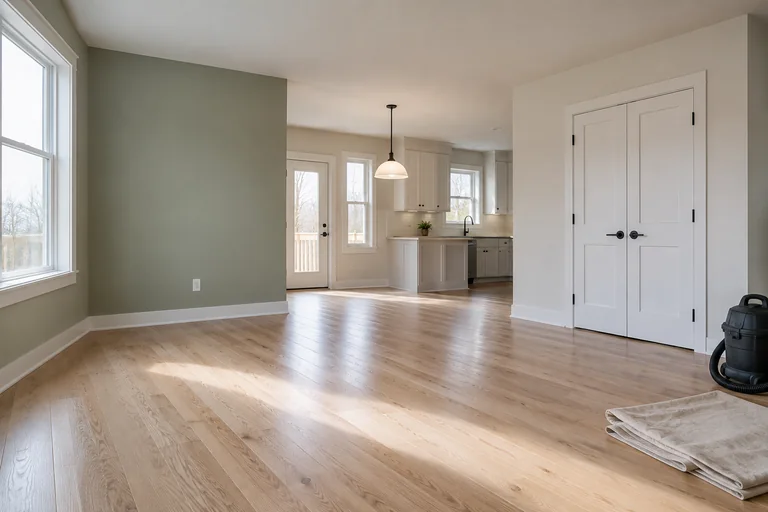
Confirm the site is ready
Agree that active cutting, sanding and wet finishing have stopped, and obtain the contractor’s relevant material or clearance information. General post-renovation cleaning is not asbestos, lead or silica remediation. Unknown or suspected hazardous dust requires suitable assessment before routine cleaning is accepted. Photograph the agreed work areas and retained furnishings from safe positions.
Protect the new materials
List floor, cabinet, glazing and fixture products, including coatings that are still curing. Review manufacturer care instructions and the contractor’s restrictions before moisture or cleaning chemicals are used. Adhesive, paint, grout haze and scratches are different conditions; each may need separate assessment. A more forceful clean is not automatically suitable for a new surface.
Define the final cleaning pass
Agree whether the scope covers one final pass or a staged return after other trades finish. Include accessible ledges, surfaces and floors without silently adding duct interiors or building repair. Record residues or damage that remain for the installer. The handoff should make clear what was cleaned, what was inaccessible and what still needs specialist attention.
Scope to discuss
- Ordinary dust on agreed finished surfaces
- Accessible ledge and cabinet-front cleaning
- Specified interior room surfaces
- Suitable cleaning of accessible floors
Optional details to quote separately
- Approved cupboard interiors
- Separate window-detail service
- Identified residue assessment
A few helpful answers.
Can any renovation dust be treated as ordinary dirt?
No. Material identity and potential hazards should be resolved before the cleaning method is selected.
Does the service include HVAC duct cleaning?
No. Duct interiors and system work require a separately defined suitable scope.
Care references
General planning guidance, reviewed October 15, 2026. Follow the instructions for your particular finish and product.