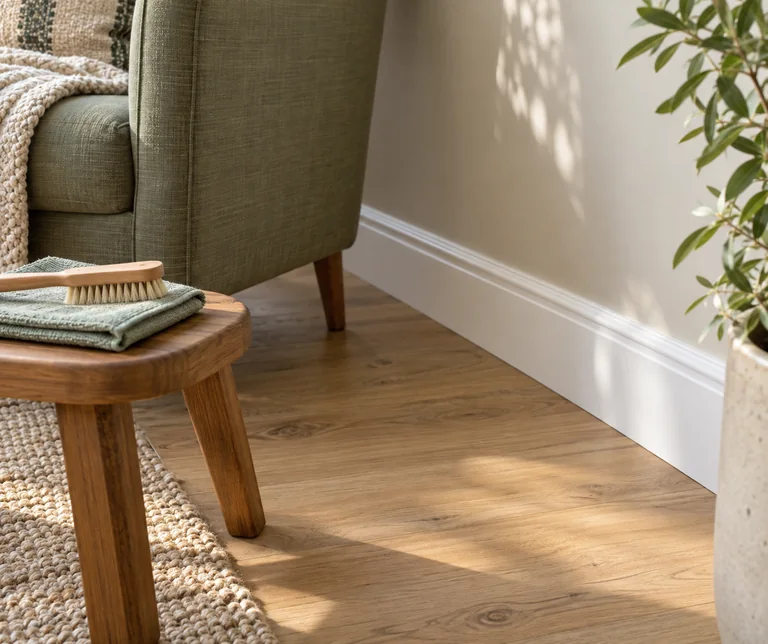
Identify the finish and marks
List baseboards, door faces, frames, handles and other trim included. Painted, stained and factory-finished surfaces can respond differently. Separate dust and fingerprints from scuffs, peeling paint or water staining. Ask whether a mark can reasonably be cleaned rather than assuming repeated scrubbing will restore a damaged coating.
Plan careful surface contact
Agree suitable products and a discreet compatibility check where appropriate. Recessed profiles, panel grooves and door edges require different access from flat faces. Avoid water entering joints, hardware or unfinished edges. Old loose coatings should be assessed before disturbance; the clean should not become unplanned paint removal or repair.
Review detail without promising decoration
At handover, check the listed trim under normal room light and distinguish remaining wear from removable soil. Record inaccessible sections behind fixed furniture and any damaged seal or coating. Painting, caulking and hardware adjustment remain separate work. This focused service can complement routine floor cleaning without duplicating a complete room deep clean.
Scope to discuss
- Listed baseboard surfaces
- Specified door faces and edges
- Accessible frame and trim profiles
- Ordinary fingerprints on agreed hardware
Optional details to quote separately
- Reachable wall-mark spot assessment
- Closet-door detailing
- Follow-on painting or repair enquiry
A few helpful answers.
Does detailing include repainting scuffed doors?
No. Cleaning can remove ordinary soil; coating wear and decoration require a separately agreed scope.
Can every wall mark be scrubbed off?
No. Paint durability and the mark’s cause vary. Stop where cleaning risks altering the finish.
Care references
General planning guidance, reviewed October 15, 2026. Follow the instructions for your particular finish and product.