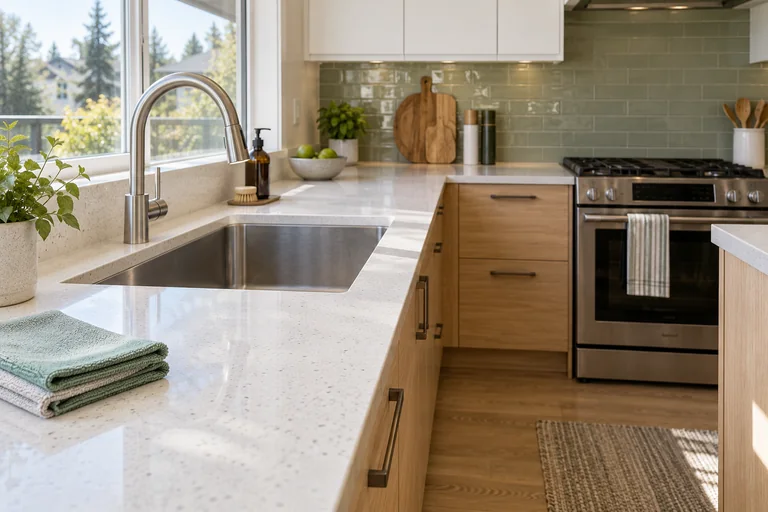
Distinguish the cooktop type
Identify glass-ceramic, induction, enamel or stainless construction and the exact model. Grates, caps and controls can have individual restrictions. Confirm the appliance is cool and available. Baked-on residue, scratches and heat discoloration are different conditions and should be described before the provider chooses a method.
Define permitted surface work
Use the manufacturer’s guidance for cleaners, tools and removable parts. Abrasion suitable for one glass surface may damage another finish or surrounding trim. Gas connections, ignition repair, electrical elements and dismantling beneath the top remain outside ordinary cleaning. Protect adjacent worktops from product overspray and keep components identified during the task.
Return components and record limits
Review the agreed surfaces and correctly reconciled user-removable parts. Note damaged glass, persistent operating problems or worn controls for a suitable appliance provider. A visual clean does not certify burner combustion or electrical performance. If residue cannot be removed within the approved method, record that limit rather than escalate to an unapproved scraper or chemical.
Scope to discuss
- Specified cool cooking surface
- Permitted removable accessory cleaning
- Accessible control and edge detailing
- Component reconciliation
Optional details to quote separately
- Oven interior cleaning
- Adjacent splashback detail
- Appliance-service enquiry
A few helpful answers.
Will cleaning remove every scratch?
No. Scratches and altered finishes are damage, not ordinary residue.
Does this include gas-burner repair?
No. Fuel and operating faults need an appropriate qualified appliance or gas provider.
Care references
General planning guidance, reviewed October 15, 2026. Follow the instructions for your particular finish and product.