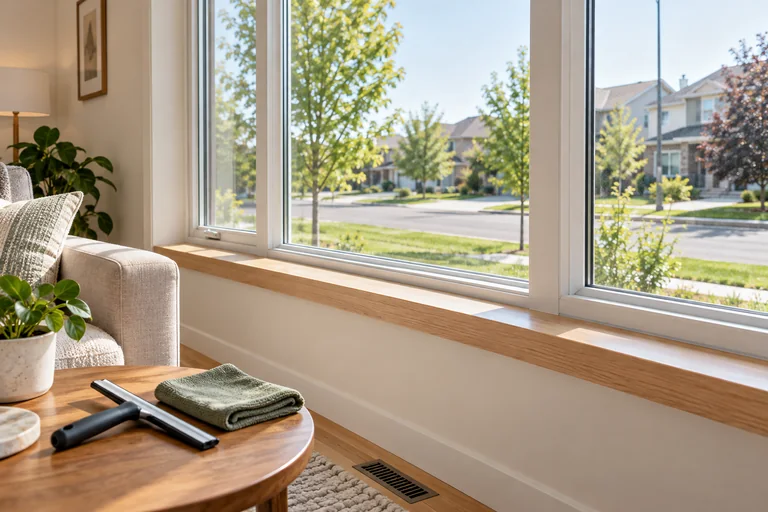
List the glazing and access
Record windows, glazed doors and internal panels included, along with height and obstructions. Applied film, specialist coatings, older glass and decorative finishes need identification. Photograph accessible areas safely; a stairwell pane can require a different access proposal from a ground-floor window. Opening or tilting mechanisms should only be used as permitted by the actual product.
Protect adjoining materials
Review the manufacturer’s glass and frame care, then choose suitable tools and products. Pella’s guidance distinguishes glass, frames, tracks and screens; cleaning the pane does not automatically include every component. Protect timber sills, fabrics and nearby electronics from moisture. Paint, adhesive and mineral damage need separate assessment rather than routine abrasive escalation.
Agree the visual handover
Review included panes under ordinary light and identify scratches, failed sealed units or marks outside the approved method. Exterior dirt can still be visible through a clean interior pane, so keep sides clearly listed. The result should be an accurate interior-glass clean, not a warranty against condensation or an implied repair to the window assembly.
Scope to discuss
- Specified interior pane surfaces
- Agreed glazed-door interiors
- Protection of nearby sill finishes
- Record of remaining glass conditions
Optional details to quote separately
- Separate track and screen service
- Accessible frame detailing
- Identified residue assessment
A few helpful answers.
Does this include the outside of the windows?
Only if separately listed with suitable exterior access and conditions.
Can cleaning fix fog between sealed panes?
No. A sealed-unit concern needs an appropriate window assessment.
Care references
General planning guidance, reviewed October 15, 2026. Follow the instructions for your particular finish and product.