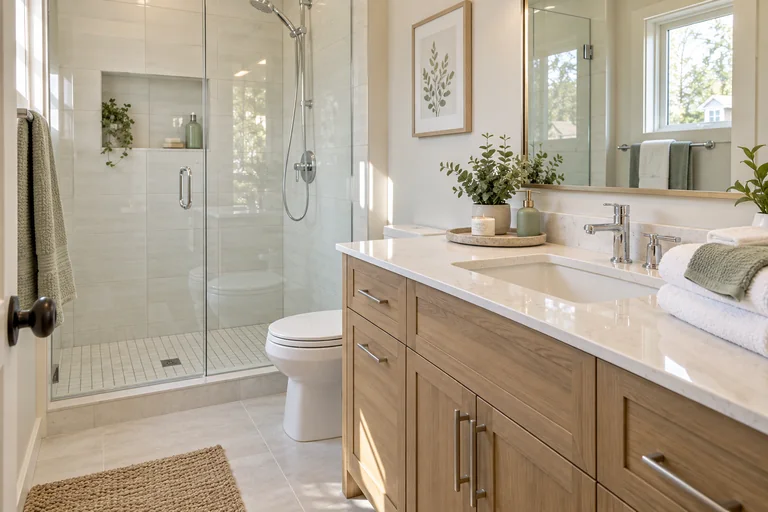
List the fixture surfaces
Identify bowl, seat, exterior base, basin, faucet and accessible surrounding surfaces. Wall-hung or close-coupled fixtures can have different accessible spaces. Record specialist coatings and any cracks or loose parts. Cleaning beneath inaccessible fittings or dismantling plumbing should not be assumed simply because the fixture appears small.
Choose suitable products
Review cleaner compatibility across porcelain, stone basins, coated metal and nearby cabinet finishes. A toilet-bowl product is not automatically suitable for the faucet or vanity. Follow product labels and keep cleaning distinct from any expressly requested disinfecting procedure. No whole-room germ or illness-prevention guarantee should be inferred from a clean-looking fixture.
Define the handoff
Review ordinary soil and residue on the listed surfaces and note permanent discoloration, damaged finish or a leak. Slow drainage, flush faults and loose mounting need a suitable plumbing provider. A careful detail clean can complement a routine visit or move handover while leaving repairs and specialist contamination clearly outside the task.
Scope to discuss
- Listed toilet and seat surfaces
- Specified basin and faucet exterior
- Accessible fixture bases and edges
- Ordinary residue review at completion
Optional details to quote separately
- Adjacent vanity-front detail
- Separate product-specific disinfection
- Plumbing-service enquiry for faults
A few helpful answers.
Does a clean toilet prove it is working properly?
No. Cleaning does not certify flushing, drainage or plumbing condition.
Can the same chemical be used on every fixture?
No. The product and each material need compatibility review and label-compliant use.
Care references
General planning guidance, reviewed October 15, 2026. Follow the instructions for your particular finish and product.