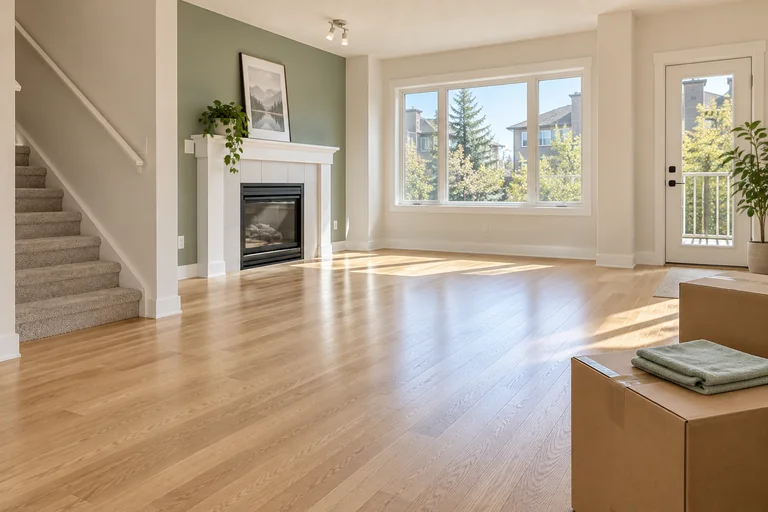
Use the empty-home opportunity
Prioritise cupboard interiors, bathroom surfaces, floors and other areas that will become harder to reach after unpacking. Confirm access timing against possession and delivery. A move-in clean differs from promising that a previous occupant’s every trace or microorganism has been eliminated. The room list and actual condition set the work.
Review materials and appliances
Identify unfamiliar surfaces and obtain available product information. New or recently refinished materials may have curing restrictions. Appliance interiors need model-appropriate care and agreement about retained food or components. If odour, moisture, pests or unknown residues are present, arrange the relevant assessment instead of covering the concern with fragrance.
Hand over before unpacking
Check cleaned storage and floors while they remain accessible, then record any permanent stains, damage or areas left for specialist work. Keep utility controls and safety equipment untouched unless included in a suitable separate task. The clean provides a useful starting point for the household’s routine plan, with realistic boundaries around inspection, repairs and maintenance.
Scope to discuss
- Agreed vacant-room surface clean
- Specified storage-interior cleaning
- Bathroom fixture and surface clean
- Suitable floor cleaning before unpacking
Optional details to quote separately
- Model-specific appliance interiors
- Interior glazing and tracks
- Textile cleaning before furnishing
A few helpful answers.
Is this a property inspection?
No. Cleaning may reveal visible concerns, but does not certify structure, utilities or indoor air quality.
Can it happen while movers are unloading?
Discuss staging and access. Cleaned areas can be re-soiled or blocked, so a suitable sequence should be agreed.
Care references
General planning guidance, reviewed October 15, 2026. Follow the instructions for your particular finish and product.